Key Takeaways
- Cash flow forecasting helps you stay ahead of financial challenges by predicting future cash inflows and outflows, allowing you to avoid unexpected cash shortages.
- A 13-week rolling cash flow forecast provides better visibility into your business’s short-term financial position, helping you make proactive decisions with confidence.
- Managing working capital effectively—including receivables, payables, and inventory—is essential for maintaining healthy cash flow and supporting business growth.
- Scenario planning and variance analysis improve forecast accuracy, enabling you to prepare for different business conditions and refine your financial strategy over time.
- Modern cash flow management combines financial expertise with technology, using dashboards and AI-powered forecasting tools to deliver real-time insights and smarter decision-making.
Let’s face it – most small business owners aren’t losing any sleep over their margins. They’re more concerned about the money in their bank accounts.
Just because your business is profitable on paper doesn’t mean that you’ll have enough to meet your payroll and vendor payments. This is where Cash Flow Forecasting becomes crucial for the survival of your business.
Why Cash Flow Forecasting is More Important than You Think
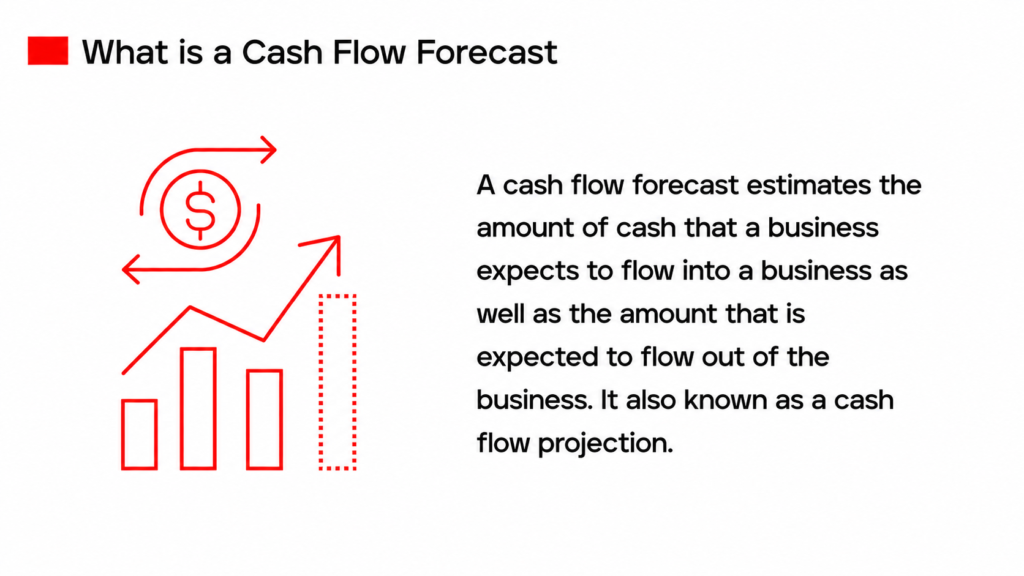
Cash Flow Forecasting can be thought of as your company’s early detection system. It provides the Cash Visibility you need to spot any potential issues.
It addresses concerns such as: Will there be enough cash for my expenses in the coming month?
Is it time to reinvest? Are we about to experience a Cash Shortage?
Based on information from CB Insights, the main reason why startups fail is due to lack of cash flow, not profitability. Likewise, a study from Deloitte reveals that companies that forecast well do better than those that don’t.
This is how important Liquidity Management is.
Understanding How Cash Actually Moves
To enhance your Cash Flow Management, you need to be aware of three main areas listed below that contribute to the cash moving in and out of your business:
This includes the operational aspects of your business such as revenue generated through sales and expenses you incur.
2. Investing Cash Flow
The amount of funds being used to help your business grow i.e. purchasing new equipment, tools, etc. and expanding your business operations.
3. Financing Cash Flow
Funds being received and/or paid back to lenders, angel investors, etc. Calculating your total Cash Position requires knowing the following: Beginning Cash + Inflow – Outflow = Net Cash Position. By consistently tracking all of your Inflows and Outflows, you will always have a complete understanding of your Cash Position at any point in time.
The Key Drivers Behind Your Cash Flow
Your Cash Flow Forecast is only as good as the underlying assumptions. It may sound surprising, but many business owners tend to concentrate only on revenues while forgetting that cash flow is all about timing. Let’s look at some of the most crucial Cash Flow Drivers:
Revenue and Expense Timing
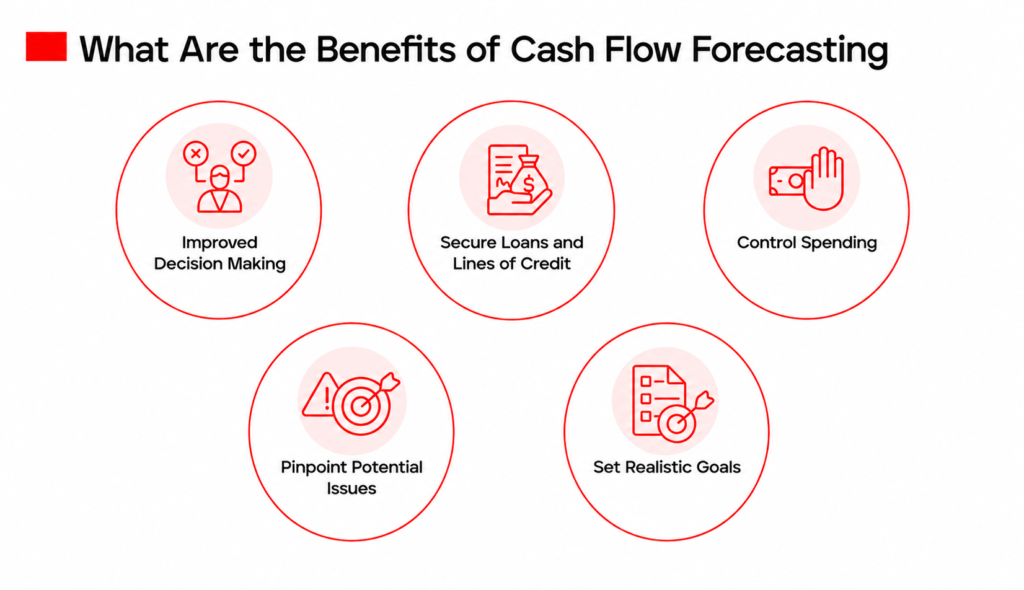
It is not about how much you earn or spend but when you do that. For instance, you close a big deal in April but receive the money in June, and until then, your Cash Position remains strained. As far as expenses go, such as office rent, salary bills, utility payments, there is no flexibility there either. The mismatch between Revenues and Expenses is one of the top causes of financial stress.
Delayed Payments
Delayed payments from clients are the number one reason for cash shortages among many business owners.
Do a self-check: Are customers paying you in time? Do you rely on several key clients too much? Enhanced Cash Visibility will be achieved by working on improving your collection methods.
Payment by Customers and Payment Delays
“Financial issues do not arise due to losses, but rather due to timing.” For instance: Sales are good, but payment takes time. Expenses precede incoming revenue. Inventories tie up cash flow.This explains why Cash Visibility is more crucial than profitability.
AI in Forecasting Today
Today we see many businesses start to use AI Approaches in their Forecasting and automated forecasting processes. Tools based on state-of-the-art Treasury technology can:
- Provide Cash Projections as they develop in real-time
- Gives businesses the ability to detect anomalies with no human involvement
- Provides Improved Accuracy of the Forecasts you product list
- With platforms like, HighRadius and Febi.ai helping organizations automate their processes and provide faster reporting results.
As a result of your organization using more automated and advanced treasury technologies will, small businesses have less time working on spreadsheets and more time making decisions.
How to Start (Without Overthinking It)
There’s no need for complicated software to initiate your Cash Flow Forecasting journey. Do it simply by:
- Analyzing previous bank activity
- Identifying Inflows/Outflows in the coming period
- Creating an essential Cash Flow Dashboard
- Preparing a 13-week forecast
- Including Scenario Analysis
- Comparing Forecast with reality
It’s better to be consistent than perfect.
Things That Will Sabotage Your Cash Flow Forecasting System
Despite having an effective Cash Flow Forecasting system, it could go wrong when you:
- Overstate revenues
- Neglect variable costs
- Don’t update on time
- Fail to have Centralized Cash Visibility
The Bottom Line
Cash Flow Forecasting is what sets apart the majority of small businesses that merely react from those that plan with confidence. However, preparing an accurate forecast, effectively managing Working Capital and maintaining Real-Time Cash Visibility can be challenging when juggling daily activities. Kandor.ca is here to help.